
Strengthen Your Workforce. Retain Talent. Grow Your Business.
Heartland Workforce Solutions offers Incumbent Worker Training (IWT) funding to help employers train their current employees. This program supports businesses that need to upgrade worker skills, respond to operational changes, implement new technology, prevent layoffs, and create advancement opportunities for existing staff.
Incumbent Worker Training is designed to support both:
- Layoff aversion by helping businessess adapt and retain workers
- Worker advancement by increasing skills, wages, and promotional opportunities
What Is Incumbent Worker Training?
Incumbent Worker Training is a Workforce Innovation and Opportunity Act (WIOA) strategy that helps employers invest in the skills of their existing workforce.
Heartland Workforce Solutions may reimburse a portion of eligible training costs when the training helps current employees:
- Gain new occupational skills
- Adapt to new equipment, technology, or processes
- Earn industry-recognized credentials
- Improve retention and advacement opportunities
- Avoid job loss due to changing business needs
Who Is Eligible?
Employers may be eligible if they:
- Are located with the HWS service area (Douglas, Sarpy and Washington counties)
- Are in compliance with federal, state, and local employment laws
- Are current on tax obligations
- Are training current employees
- Agree to provide the required cash match
- Sign a contract before training begins
For this program, an incumbent worker is generally a current employee with an established work history (six or more months) with the employer.
What Training May Be Funded?
Eligible training may include:
- Occupational skills training
- Industry recognized credential programs
- Training on new equipment, systems, or technology
- Customized training designed to meet specific business needs
- Cohort-based training for multiple employees
Training must build skills beyond normal onboarding or orientation.
Training that is not eligible includes:
- New hire orientation
- Training required by law
- Mandatory compliance training required for all employees
- Training that begins before a contract is fully executed
Employer Match Requirements
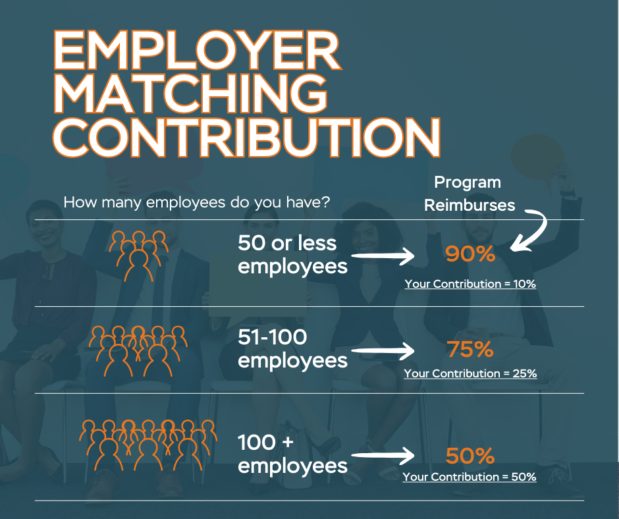
Employers are required to contribute a share of training cost based on company size.
Cash match only
Employer cost share must be provided as a cash contribution only. In-kind contributions, including employee wages paid during training, are not accepted as match.
Minimum employer cash match:
For additional questions about the Incumbent Worker Training program, please contact Jasmin Cabrera.
Additional Resources
How the Process Works
Step 1: Connect with Heartland
Employers start by speaking with the Heartland Workforce Solutions Business Services team about training needs, eligibility, and project fit.
Step 2: Submit an Application
Employers complete the online application and provide the required training and budget information.
Step 3: Application Review
HWS' Workforce Innovation and Strategy Committee reviews the request for eligibility, training relevance, business need, expected worker impact, and available funding. Once reviewed, it will go to the Greater Omaha Workforce Development Board for approval.
Step 4: Agreement
If approved, HWS and the employer execute an Incumbent Worker Training contract.
Training cannot begin until the agreement is fully executed.
Step 5: Training Delivery
The employer completes the approved training and maintains all required records.
Step 6: Reimbursement
After training is completed, the employer submits reimbursement documentation for review.
Employer Expectations
- Complete the online application fully and accurately
- Provide complete training and budget information
- Ensure training follows the approved plan
- Retain documentation related to training, attendance, invoices, and payment
- Submit reimbursement materials after training is completed
- Cooperate with any required program monitoring or file review
Reimbursement Process
After training is completed, employers must submit documentation that may include:
- Final invoice(s)
- Proof of payment
- Attendance or completion records
- Credential documentation, if applicable
- Any required outcome documentation
Reimbursement is processed only after all required documentation is received and approved.